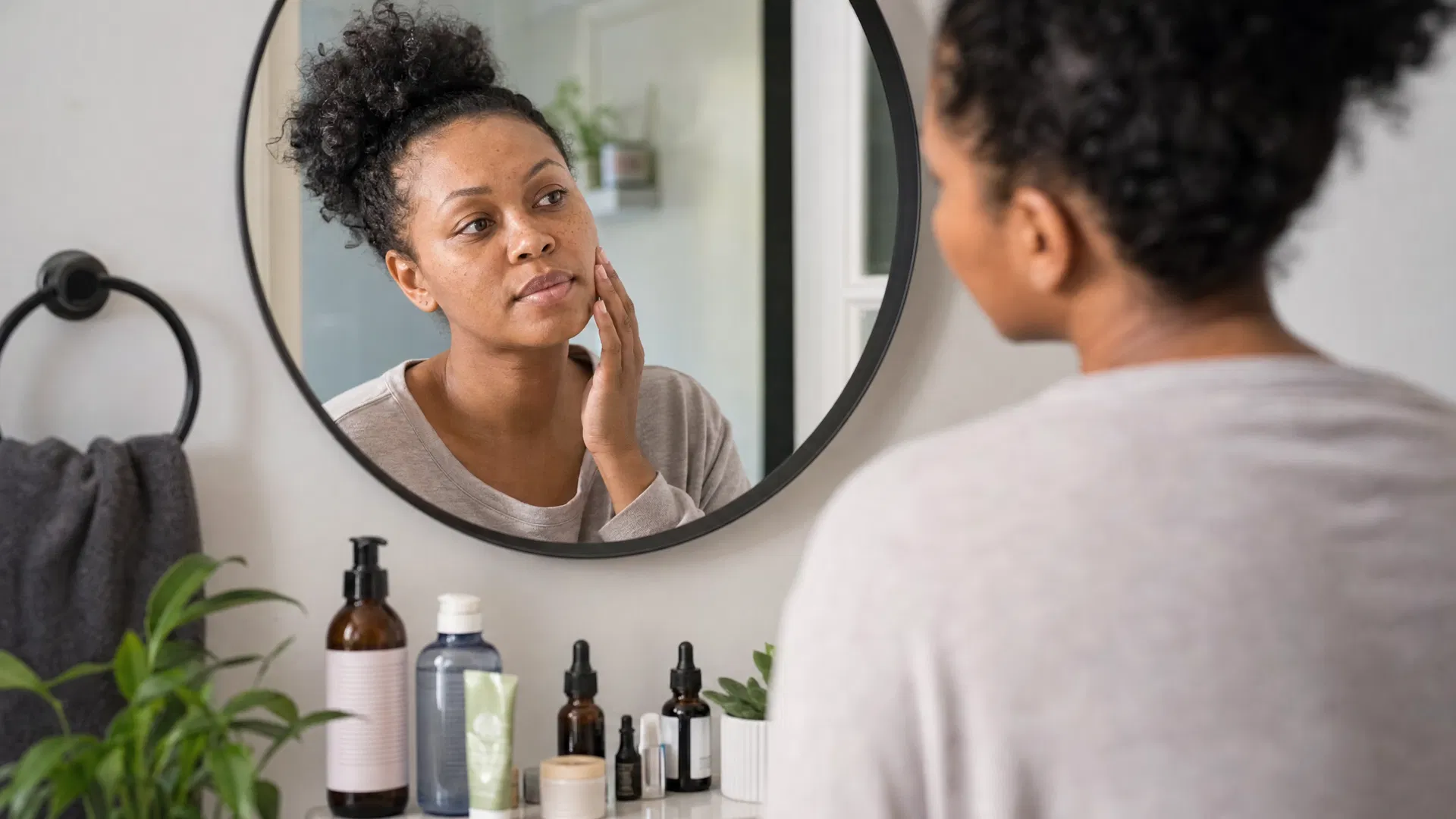
How to Use AI to Build Your Perfect Skincare Routine (Upload a Selfie, Get a Personalized Plan)
Note: This article contains general skincare information and is not a substitute for advice from a qualified dermatologist or healthcare provider.
The skincare industry has a business model problem that it will never fix: it profits most when you buy the wrong products. Generic advice — try this serum for glow, this moisturiser is a bestseller — sells products without accounting for the fact that your skin is not the reviewer's skin, not the influencer's skin, and not the model's skin on the packaging.
A hyaluronic acid serum that transformed someone's dry skin can make oily, congested skin significantly worse. A highly-rated vitamin C product can cause stinging and redness on a disrupted skin barrier. Retinol that works beautifully for a 30-year-old without kids can cause weeks of irritation for a postpartum mom whose skin sensitivity has changed.
AI doesn't have a sales incentive. It has your information. And in 2026, Claude and ChatGPT are genuinely good at using that information to build a skincare routine that fits your actual skin — not a demographic average of it.
Why AI Skincare Analysis Works Better Than Generic Advice
The gap between generic skincare advice and personalised skincare is enormous — and the research proves it. A 2025 peer-reviewed literature review published in Cureus found that AI-powered personalised skincare outperforms generic recommendations by integrating factors that generic advice cannot account for simultaneously: skin type, pigmentation, texture, hormonal status, lifestyle factors like sleep and stress, and ingredient interactions.
The reason AI does this well is the same reason it does other complex multi-variable problems well: it can hold many constraints simultaneously. A well-structured prompt that includes your skin type, your concerns, your current products, your life situation, and your goals produces output that no single product recommendation or generic skincare article can match.
Step 1: The Selfie-Based Skin Analysis
Claude (the AI behind this site) can analyse a photo of your face and describe what it observes about your skin — texture, visible concerns, hydration appearance, areas of unevenness. ChatGPT with image upload does the same.
How to take the right photo for skin analysis:
- Natural daylight, not direct sunlight (window light is ideal)
- No makeup or as little as possible
- Clean, dry face — freshly washed gives the clearest read
- Straight-on shot and one side profile if you have specific concerns on one area
- Full face visible including hairline and jawline
The skin analysis prompt — use with your photo uploaded:
Please analyse my skin from this photo. I want you to describe: 1) My apparent skin type (oily, dry, combination, normal — and where specifically), 2) Any visible concerns you can observe (texture, pores, uneven tone, areas of redness, dullness, lines), 3) The approximate condition of my skin barrier (does it appear compromised, healthy, dehydrated), 4) What you would prioritise addressing first if building a routine for this skin. Be specific and honest — I need a real assessment, not a polished one.The output is a starting point for understanding what your skin actually needs — not what you think it needs based on how you feel about it. Many women discover their skin is dehydrated rather than oily, or that their barrier is compromised (explaining the reactivity) rather than that they need stronger actives.
Step 2: The Full Personalised Routine Build
Once you have your skin analysis, build the full routine with this prompt:
Based on the skin analysis above, I want to build a complete skincare routine. Additional context: I am [age], I have [number] children and my youngest is [age]. I am [breastfeeding / not breastfeeding]. My main skin concerns in priority order are: [list — e.g., 1. hormonal acne jawline, 2. dark spots, 3. dullness, 4. fine lines]. My budget for new products is [low/moderate/flexible]. I currently own: [list every product you have]. Please give me: 1) A complete AM routine with products and order of application, 2) A complete PM routine, 3) A clear explanation of why each product/ingredient is included, 4) Which of my existing products to keep, which to stop using, and why, 5) If I need new products, what ingredients to look for — not specific brands, just the ingredients and what a reasonable price range looks like.Asking for ingredients rather than brands matters. Brand recommendations from AI may be outdated or regionally unavailable. Asking for the active ingredient (niacinamide, azelaic acid, peptides) lets you find the best-value product with that ingredient in your local market.
Step 3: The Layering Order Check
One of the most common skincare mistakes is applying products in the wrong order — rendering some ineffective and potentially causing others to pill or irritate. Product layering has a logic: thinnest to thickest, water-based before oil-based, pH-dependent products applied correctly.
Use this prompt once you have your routine:
Here is my planned skincare routine in the order I intend to apply it: [list AM products in order / list PM products in order]. Please check: 1) Is this the correct application order for maximum effectiveness?, 2) Are there any ingredient combinations I should not use at the same time (e.g., certain acids with retinol, vitamin C with certain ingredients), 3) Is there anything that should be used only AM, only PM, or alternated rather than used every day?, 4) How long should I wait between any of these steps?This step alone prevents the most common reason skincare routines fail: not the wrong products but the wrong sequence or combination.
Step 4: The Progress Check Prompt (Use at 6 Weeks)
Skin changes take time. Cell turnover is approximately 28 days, and most active ingredients take 6–8 weeks to show measurable results. At six weeks, use this prompt with a new photo to assess progress:
I started a new skincare routine 6 weeks ago. Here is what I have been using: [list routine]. Here are two photos — one from when I started and one taken today in the same lighting. Please: 1) Describe any visible changes between the two photos, 2) Identify which concerns appear to have improved and which have not yet responded, 3) Tell me whether to continue the current routine, adjust the frequency of any products, add anything new for the concerns that haven't responded, or simplify anything that may be causing issues.Skincare without progress tracking is how women spend hundreds of dollars on products that aren't working — because each individual product seems like it should be working, so they keep buying more. The AI progress check creates an objective evaluation point.
The AI Tools That Do Skin Analysis Specifically
Beyond Claude and ChatGPT, several dedicated apps now offer AI skin analysis:
Neutrogena Skin360: Free app that uses your phone camera to measure moisture, fine lines, clarity, and other skin markers. Tracks changes over time. Pairs recommendations with Neutrogena products — adjust for this commercial bias but the underlying analysis is useful.
La Roche-Posay Spotscan+: AI analysis via selfie delivering acne assessment and personalised product recommendations. Available on iOS and Android. The acne assessment is clinically grounded.
YouCam Makeup: Includes a skin analysis feature that assesses texture, pores, redness, dark circles, and spots from a selfie. Free tier available.
Cetaphil AI Skin Analysis: Specifically developed for sensitive skin analysis. Good starting point if your primary concern is sensitivity and barrier disruption.
Use these apps to supplement — not replace — the conversational AI prompts above. The apps give you a quantified baseline (moisture score, acne score) while Claude or ChatGPT gives you the deeper why and the personalised routine logic.
The Most Common Mom Skincare Mistakes AI Consistently Flags
Using a harsh cleanser: Stripping cleansers that leave your skin feeling squeaky clean are actually damaging your skin barrier. Tight, dry skin after cleansing is a sign of barrier disruption — not cleanliness. Switch to a gentle, pH-balanced cleanser and many other issues improve within weeks.
Skipping SPF: The most evidence-backed anti-aging, anti-melasma, anti-damage product costs $15–25 and takes 10 seconds to apply. Melasma that UV isn't triggering daily stays manageable. Melasma with daily unprotected UV exposure becomes permanent. This is the non-negotiable.
Using too many actives simultaneously: The tendency to layer multiple acids, retinoids, and vitamin C together in pursuit of faster results reliably backfires. More actives on a compromised barrier creates more irritation, not more improvement. AI consistently recommends simplifying before adding.
Ignoring the neck: The neck shows aging earlier than the face in many women and receives none of the treatment. Whatever you're using on your face should extend to your neck and décolletage.
Buying products for someone else's concerns: The influencer with luminous skin and your skin type concerns may look nothing alike. AI personalisation removes this problem entirely.